If you were around in the 1990s, then you most certainly heard a song by a band named LFO titled, "Summer Girls." Released in 1999, it dominated the radio waves, television waves, and even my waves of desperation for someone to turn MTV off so I could breathe for a few minutes. Quite frankly, I was starting to suffocate. But even in my moments of peace from the song, I still couldn't help but repeat the main chorus line:
I like girls who wear Abercrombie and Fitch,
I'd take her if I had one wish.
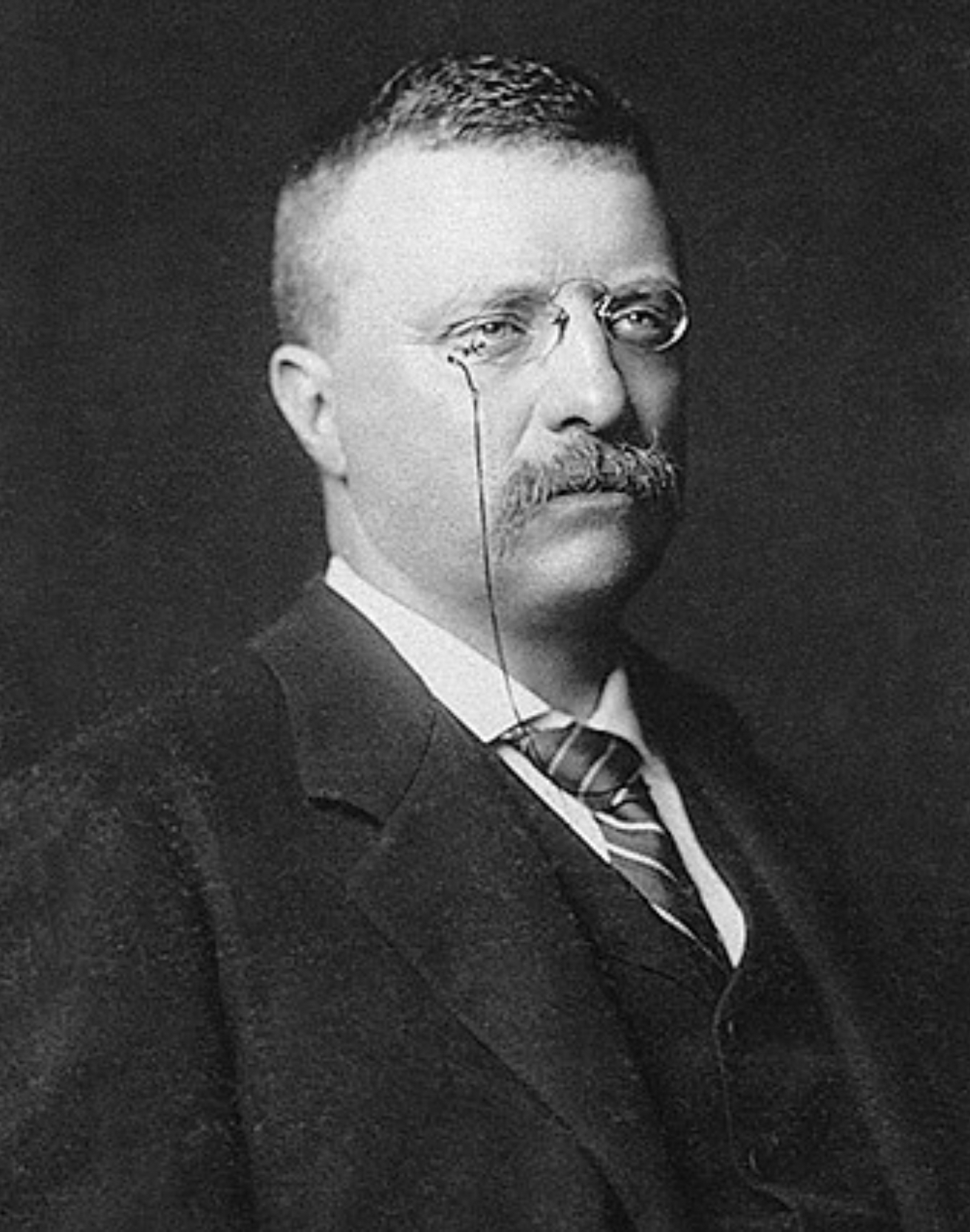
Theodore Roosevelt.
It was just too catchy. But enough about LFO and their song, I'm really here to talk to you about the 26th President of the United States of America.
Are you surprised that I found a connection between a 1990s one-hit wonder, a clothing brand known for trendy teens, and a president who lived before indoor toilets really took off in America? Well, you shouldn't be. Old Teddy Roosevelt, the Rough Rider himself, actually wore Abercrombie and Fitch. They were mostly a mail order company back then and didn't cater to urban youth like the summer girls that LFO sang about 80 years later. Instead, they sold outdoor wear. The kind of thing you wore on an African safari or a Mississippi bear hunt. And if you know anything about Teddy, that was all him. But it's more than just an interesting tidbit since I think the three seemingly unconnected things--the President, the 1990s pop song, and the clothing company--all convey something clearly when you do piece them together. And it centers around one word: change.
Theodore Roosevelt was a voracious reader. He would read at least one book a day and often read multiple at a time, alternating between each periodically until they were finished.
In Teddy Roosevelt's day, Abercrombie and Fitch catered to serious people who were often doing things outdoors for either survival or for expansion. And the president who wore those types of clothes was in a position where he was expected to do both for the well-being of the country: survive and expand. While people remember Teddy for being loud and aggressive, he was more nuanced than the caricature. He was well read and even brokered a peace between Japan and Russia. He worked to understand both the physical and intellectual world around him.
By the time LFO came out with "Summer Girls," the United States had reached the apex of its power and wealth. The Cold War was over and America was experiencing the peace dividend. Some even called it the end of history. Abercrombie and Fitch moved on from the outdoor types and now served the urban youth, whose main goal was to just go hang out at the mall after school. The president in 1999 was different in personality than Teddy. But he did share much of the curiousity and yearning to understand the world around him that Teddy had, however flawed he was in his personal life. America, as a country, was arguing about what to do with the budget surpluses! In other words, one of the biggest problems we faced as a nation was how best to deal with our success. And some late night talk show hosts even joked that the country didn't even need a president anymore--it's all just working out.
It wasn't just Teddy who liked A&F. Other notable people ranging from Amelia Earhart to even later presidents like John F. Kennedy and Gerald Ford shopped at Abercombie and Fitch. The shift from outdoors merchandise to "cool kid" clothes started after the company's bankruptcy in the 1970s.
And now, we're experiencing the results of a different character of change. Abercrombie and Fitch is a shell of its former self with the malls that it inhabited back in the 1990s mostly shuttered or dying. We have a President that was a reality TV star in the early 2000s and treats presidential communications and governance much like he did when he popularized the phrase, "you're fired." But it's more than just the Executive Branch--almost all American institutions have become paralyzed looking inward and squabbling over things that really don't matter to the people who used to work in the American malls and factories that got us to 1990s prosperity. We aren't arguing over what to do with budget surpluses anymore. I don't think budget surpluses is a problem we'll have to worry about for a long time, unfortunately. Things change. And all we have to do is look at Teddy Roosevelt while we listen to a 1999 pop hit to remind us of that.